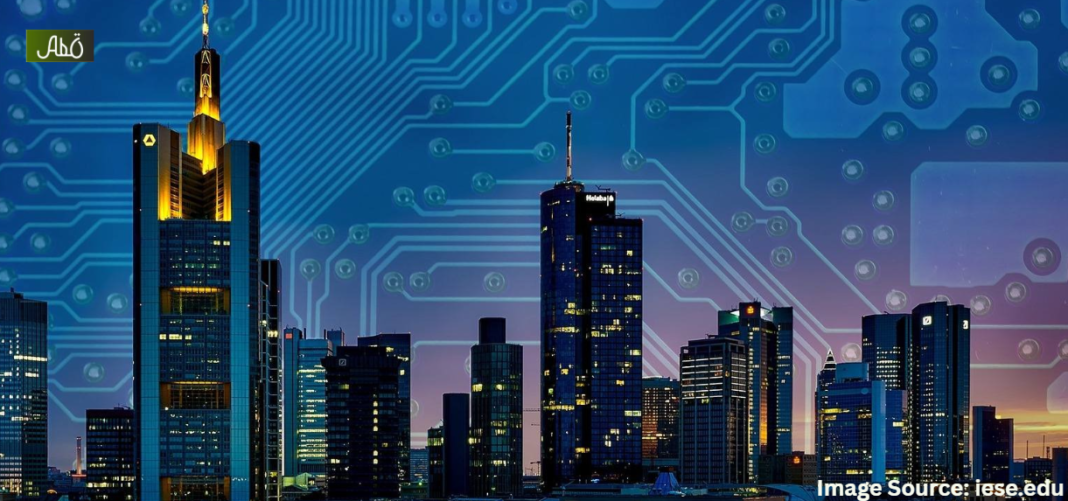
Across the Gulf Cooperation Council, cities are being redesigned around technology, connectivity, sustainability, and more efficient services. This transformation is creating a powerful connection between smart cities and business growth, as governments invest in digital infrastructure while companies develop solutions for transportation, energy, healthcare, construction, security, tourism, and urban services. From Saudi Arabia and the UAE to Qatar and Oman, smart-city development is becoming an important part of the region’s broader economic diversification strategy.
The scale of this transformation is substantial. Saudi Arabia’s Vision 2030 has placed technology, infrastructure, quality of life, and economic diversification at the center of national development, while the UAE continues to expand digital government and smart-city initiatives. Together, these developments are creating new markets for technology companies, infrastructure providers, startups, investors, and businesses supplying the next generation of urban services.
Smart Cities and Business Growth Are Reshaping the GCC Economy
The concept of a smart city extends well beyond connected devices or digital government applications. Modern smart-city projects integrate data, artificial intelligence, sensors, cloud platforms, automation, transportation systems, energy networks, and digital services to improve how cities operate.
For businesses, this creates demand across an expanding technology ecosystem. Companies can provide everything from intelligent traffic-management systems and smart buildings to cybersecurity platforms, digital payment infrastructure, predictive maintenance, and environmental monitoring.
The economic impact can extend further. Large smart-city developments require construction companies, engineering firms, financial institutions, professional services providers, technology specialists, logistics companies, and thousands of supporting businesses. As a result, urban transformation can create opportunities throughout the wider business ecosystem rather than only within the technology sector.
Saudi Arabia Is Building New Urban Business Ecosystems
Saudi Arabia represents one of the most ambitious smart-city markets in the GCC. The Kingdom’s Vision 2030 program is supporting large-scale urban development alongside investments in technology, infrastructure, tourism, and quality-of-life projects.
Projects such as NEOM illustrate the scale of Saudi Arabia’s ambitions for technology-enabled urban development. The wider ecosystem around these developments creates opportunities across artificial intelligence, robotics, renewable energy, advanced construction, mobility, logistics, hospitality, healthcare, and digital infrastructure.
The opportunity for businesses is therefore not limited to participating directly in major projects. Suppliers, technology companies, consultants, contractors, startups, and service providers can become part of the networks supporting new urban economies.
The UAE Is Expanding Smart Infrastructure and Digital Services
The UAE has developed a strong foundation for smart-city development through investments in digital infrastructure, transportation, artificial intelligence, and connected public services.
Dubai has positioned digital transformation as an important part of its economic strategy. Initiatives involving artificial intelligence, autonomous transportation, smart infrastructure, and digital government are creating demand for technology and specialized business services.
Abu Dhabi is similarly investing in digital government and advanced infrastructure. The combination of established financial markets, international businesses, technology companies, and modern infrastructure gives the UAE a strong ecosystem for companies developing urban technologies.
For international businesses, the UAE can also provide a platform for testing and commercializing technologies before expanding them into other GCC markets.
Technology Is Creating New Business Opportunities
One of the most important links between smart cities and business growth is the increasing demand for technology solutions.
Artificial intelligence can help cities analyze large quantities of information and improve decision-making. Internet of Things devices can monitor buildings, transportation systems, utilities, and industrial infrastructure. Cloud computing allows organizations to process and share data at scale, while cybersecurity becomes increasingly important as more urban systems become digitally connected.
These developments are creating opportunities for both established technology companies and startups. Businesses specializing in AI, data analytics, cybersecurity, cloud infrastructure, smart mobility, digital twins, robotics, and automation can find applications across multiple sectors.
The opportunity is particularly significant because smart-city technologies are rarely isolated. A transportation platform, for example, can connect with payment systems, traffic management, parking infrastructure, public safety networks, and urban analytics. This creates room for businesses capable of providing integrated solutions.
Smart Infrastructure Is Supporting New Industries
Urban transformation is also changing traditional industries. Construction companies are adopting digital project-management tools, building-information modeling, automation, and advanced materials. Real estate developers are incorporating connected-building systems and energy-management technologies. Logistics companies are exploring automated warehouses and intelligent supply chains.
Energy is another important area. GCC countries are investing in renewable energy, energy efficiency, smart grids, and technologies designed to manage growing urban demand. These developments create opportunities for engineering companies, clean-technology providers, energy-management businesses, and infrastructure investors.
Healthcare is also becoming increasingly connected. Digital health platforms, remote monitoring, smart hospitals, and data-driven healthcare systems can improve the delivery of services while creating new markets for technology companies and specialized providers.
Smart Cities Can Strengthen the GCC Startup Ecosystem
The development of smart cities is also creating opportunities for entrepreneurs. Startups can address specific urban challenges without necessarily competing directly with large infrastructure companies.
Mobility platforms, property technology, digital payments, waste-management solutions, energy analytics, urban safety systems, and smart retail technologies are examples of areas where startups can develop specialized products.
As GCC governments continue encouraging entrepreneurship and private-sector participation, smart-city programs can become important environments for testing new technologies. Partnerships between governments, corporations, investors, and startups can help move promising technologies from pilot projects toward commercial deployment.
The Future of Smart Cities and Business Growth
The relationship between smart cities and business growth is likely to become increasingly important as GCC economies diversify. Urban transformation is creating demand not only for advanced technology but also for construction, finance, logistics, professional services, energy, healthcare, tourism, and real estate.
The next phase will require businesses to move beyond simply supplying individual technologies. Companies that can integrate data, infrastructure, artificial intelligence, and human-centered services may find opportunities across multiple urban sectors.
For the GCC, smart-city development represents more than an infrastructure upgrade. It is becoming part of a broader economic transformation in which cities serve as platforms for innovation, investment, entrepreneurship, and new industries.
As Saudi Arabia, the UAE, Qatar, Oman, Bahrain, and Kuwait continue developing digitally connected urban environments, smart cities and business growth will remain closely linked. The businesses that participate in this transformation will help shape not only how GCC cities operate, but also how the region creates new markets, attracts investment, and builds its next generation of economic opportunities.