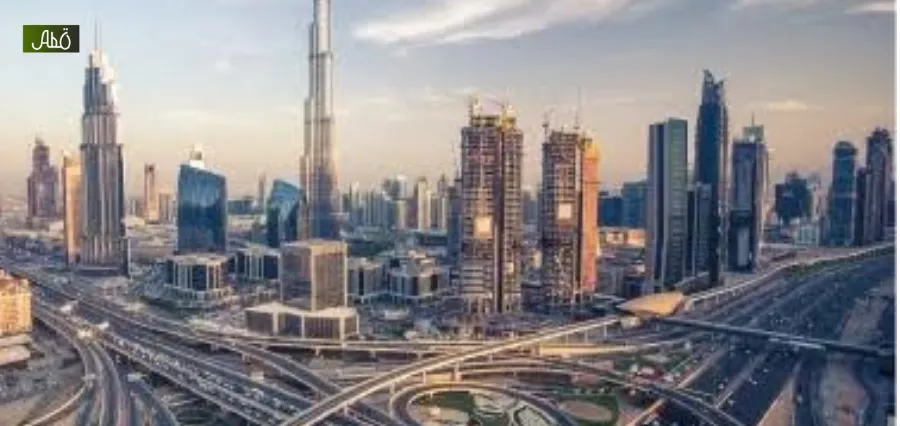
Dubai has evolved from a regional trading centre into a major destination for companies seeking international growth. Its combination of global connectivity, business infrastructure, investment-friendly policies, diverse talent, and access to emerging markets continues to attract multinational corporations and ambitious businesses. Today, Dubai’s global business advantage is reflected not only in the number of companies establishing operations in the emirate, but also in the breadth of industries using Dubai as a base for regional and international expansion.
The momentum remains significant. Dubai attracted 1,253 announced greenfield foreign direct investment projects in 2025, an increase of 10.5% from 2024, according to data from the Financial Times’ fDi Markets database. The emirate also retained the global No. 1 position for greenfield FDI projects for the fifth consecutive year.
Dubai’s Global Business Advantage Starts With Global Connectivity
One of Dubai’s strongest advantages is its geographic position between major markets in Asia, Europe, Africa, and the Middle East. International businesses can use the city as a regional headquarters while maintaining connections with customers, suppliers, investors, and partners across multiple markets.
This connectivity is reinforced by Dubai’s airports, seaports, logistics infrastructure, financial services, and digital networks. For companies expanding internationally, having access to efficient transportation and established trade infrastructure can make it easier to coordinate regional operations and reach customers across borders.
Dubai’s international business ecosystem is also becoming increasingly interconnected. In 2025, Dubai International Chamber attracted 64 multinational companies and 309 SMEs to the emirate, while expanding its international representative-office network to 38 locations.
A Business Environment Built for International Companies
The UAE business environment offers international companies several structures through which they can establish and expand operations. Dubai’s free zones have traditionally played an important role in attracting businesses by providing specialised environments for sectors ranging from technology and finance to logistics and creative industries.
Regulatory integration is also evolving. In 2025, Dubai introduced a Free Zone Mainland Operating Permit that allows eligible free-zone companies to operate on the mainland through a structured permit framework. The initiative was designed to make it easier for companies to expand across jurisdictions and participate in domestic trading and government contracting.
For international businesses, such developments can reduce some of the friction associated with scaling operations. The broader objective is to create a more connected business environment in which companies can establish a presence and then expand their activities as their requirements change.
Dubai FDI Is Expanding Across Diverse Industries
Another important element of Dubai’s global business advantage is the diversity of sectors attracting foreign investment. Dubai is no longer positioned simply as a destination for trading companies or traditional financial businesses.
Recent FDI activity has extended across financial services, artificial intelligence, information and communications technology, professional services, life sciences, consumer goods, transportation, warehousing, environmental technology, and creative industries. In the first half of 2025, Dubai ranked first globally for greenfield FDI projects across several of these clusters, according to fDi Markets data cited by the Dubai government.
This sectoral diversity matters because it creates an ecosystem in which companies can find suppliers, professional services, technology partners, investors, and skilled employees within the same market.
Finance, Technology, and Innovation Strengthen the Ecosystem
Dubai’s financial infrastructure is another major attraction for international businesses. The Dubai International Financial Centre continues to expand its role as a financial gateway connecting businesses and investors with the wider Middle East, Africa, and South Asia region.
DIFC reported 8,844 active companies at the end of 2025, representing 28% year-on-year growth in organically acquired active companies. The centre also recorded substantial growth in registrations, revenues, and profits during the year.
Technology is similarly becoming central to Dubai’s growth strategy. Artificial intelligence, fintech, digital infrastructure, cybersecurity, and advanced business services are attracting increasing attention from companies looking for locations that can support technology-led expansion.
A Gateway to Regional and Global Growth
For many international companies, establishing operations in Dubai is not simply about entering the UAE market. It can also provide a platform for accessing opportunities across the wider GCC, Middle East, Africa, and South Asia.
This regional role is supported by Dubai’s international business networks and its growing focus on helping companies expand in both directions. Dubai International Chamber’s global network is designed not only to attract foreign companies to Dubai but also to support Dubai-based businesses entering international markets.
Tourism, logistics, finance, technology, professional services, manufacturing, and consumer businesses can all benefit from this interconnected environment. The result is an economy in which international companies can establish regional headquarters, build partnerships, serve nearby markets, and develop new commercial opportunities from a single strategic base.
Why Companies Continue to Expand in Dubai
The continuing expansion of international companies reflects a combination of factors rather than a single advantage. Infrastructure, international connectivity, regulatory development, financial services, access to talent, sector diversity, and an established global business community collectively shape Dubai’s appeal.
As the emirate advances the Dubai Economic Agenda D33 and works toward doubling the size of its economy by 2033, the business environment is continuing to evolve.
Ultimately, Dubai’s global business advantage lies in its ability to connect companies with markets, capital, infrastructure, technology, and international networks. For businesses looking beyond their home markets, Dubai increasingly represents not simply a place to establish an office, but a platform from which they can build regional operations and pursue broader international growth.