
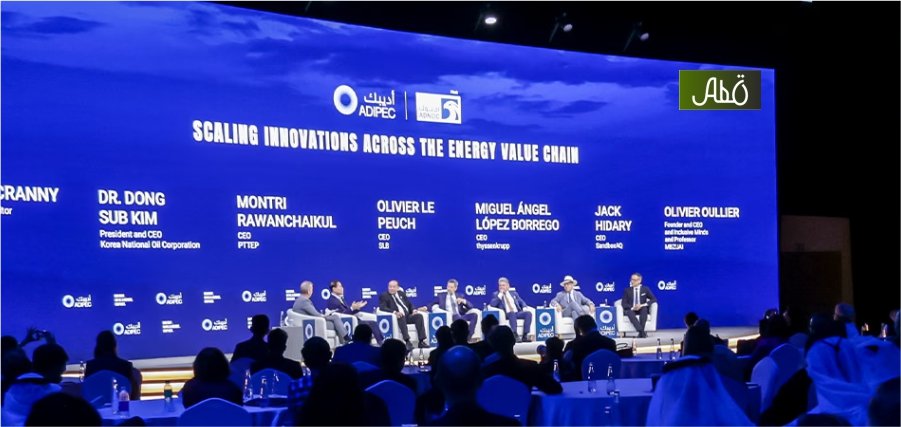
The ADIPEC Technical Conference 2026 is placing artificial intelligence, digital transformation, and operational excellence at the centre of the energy industry’s next phase of development. With more than 7,200 technical submissions received for this year’s programme, the conference reflects a growing shift across the global energy sector from experimenting with emerging technologies to deploying solutions that deliver measurable improvements in performance, reliability, and efficiency.
Scheduled for November 2–5 in Abu Dhabi, the conference will bring together engineers, researchers, technology specialists, and energy executives to explore practical approaches to meeting rising energy demand. Haitham Al Jenaibi, Executive Vice President of Development and Production (Gas) at ADNOC Upstream and the conference chair, is guiding a programme designed to connect technical innovation with real-world operational needs.
ADIPEC Technical Conference 2026 Highlights Practical AI Applications
The energy industry is increasingly moving beyond discussions about whether digital transformation is necessary. The central question now concerns where artificial intelligence can deliver the greatest operational value and how successful applications can be expanded across multiple assets and facilities.
Applications such as predictive maintenance, production optimisation, and intelligent planning are attracting particular attention. These technologies can help operators identify equipment problems before failures occur, improve production decisions, and allocate resources more efficiently.
However, implementing artificial intelligence across complex energy operations requires more than adopting new software. Companies must ensure that digital systems work within existing infrastructure, meet operational requirements, and provide dependable results under real field conditions.
The conference received more than 7,200 technical submissions, including a record 1,296 papers focused on artificial intelligence and digital transformation. Contributions came from 27 countries, reflecting the international interest in applying advanced technologies to the challenges facing the energy industry.
The submissions highlight the growing importance of technical collaboration between operators, technology providers, researchers, and engineering specialists.
Turning Digital Experiments into Operational Results
One of the industry’s most important challenges is moving promising technologies beyond limited pilot projects. While an initial trial may demonstrate potential, its wider value depends on whether the solution can be adapted to different operating environments and deployed at scale.
Structured field trials, clearly defined performance criteria, and early collaboration between technology developers and energy operators can help address this challenge. Testing solutions under actual operating conditions enables companies to assess reliability, identify limitations, and determine whether an investment can produce sustainable commercial benefits.
Capital allocation is another important consideration. Energy companies must balance investments in existing facilities with larger digital transformation programmes. Upgrading established assets can deliver immediate operational improvements, while enterprise-wide platforms may offer broader benefits over a longer period.
The most effective investment decisions will depend on measurable business outcomes, including equipment availability, production efficiency, maintenance costs, and the ability to scale successful applications across operations.
For energy companies operating in the Gulf, these decisions are particularly significant as they seek to improve existing infrastructure while preparing for changing patterns of global energy demand.
Engineering Excellence Extends Beyond Artificial Intelligence
Although digital innovation is a major focus, the technical programme covers a wider range of disciplines across the energy value chain.
The conference will examine advanced drilling and well delivery, integrated field development, exploration and geoscience, refining and chemicals, marine operations, project delivery, and environmental management. Workforce development and organisational transformation also form part of the programme.
These areas demonstrate that the industry’s progress depends on combining digital capabilities with established engineering expertise. Artificial intelligence can support decision-making, but its effectiveness relies on accurate data, sound technical processes, qualified personnel, and appropriate operational controls.
Developments in drilling technologies, subsurface analysis, and integrated field planning can help companies improve resource management and reduce operational uncertainty. Similarly, stronger project execution and asset management practices can support more predictable costs and delivery schedules.
By bringing specialists from different technical disciplines together, the conference aims to encourage knowledge-sharing and identify solutions that can be adapted to diverse operating environments.
Strengthening the Future of Energy Systems
The broader significance of ADIPEC 2026 lies in its emphasis on implementation. As energy systems become more interconnected and operational demands grow, companies need solutions that improve reliability while maintaining efficiency and resilience.
The conference will provide a platform for examining how technical knowledge can translate into practical improvements across the industry. Its programme is expected to feature more than 190 sessions and over 1,100 expert speakers, creating opportunities for professionals to exchange experience and evaluate emerging approaches.
For the Middle East, where energy infrastructure remains central to economic development, advances in automation, engineering, and digital operations could support stronger productivity and long-term competitiveness.
The region’s energy companies are also navigating changing technology requirements, evolving investment priorities, and growing demand for dependable energy supplies. Addressing these pressures will require coordinated decisions involving engineering, finance, technology, and workforce development.
As the industry prepares for the conference, the focus is increasingly clear: innovation must demonstrate practical value before it can transform operations at scale. The next phase of energy development will depend not simply on introducing advanced technologies, but on integrating them effectively into the systems that produce, process, and deliver energy worldwide.
Read More :- Investing in the Middle East: Emerging Opportunities Across the GCC Markets