
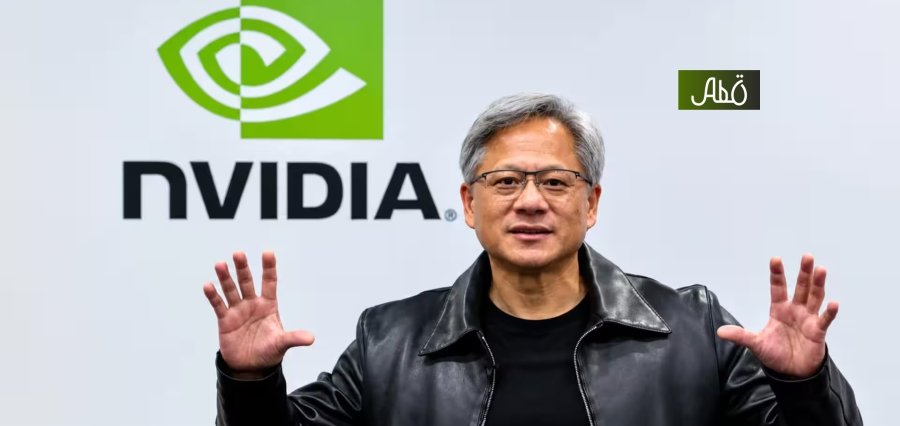
The return of NVIDIA’s co-founder as CEO marks a significant moment for the technology industry, bringing renewed leadership to a company at the forefront of artificial intelligence, accelerated computing, and next-generation innovation.
The global technology landscape is experiencing a profound transformation, with artificial intelligence, advanced computing, and intelligent automation redefining the way industries operate. At the centre of this evolution stands NVIDIA, a company whose technologies have become essential to the development of modern AI infrastructure. As its co-founder Jensen Huang returns to the position of President and Chief Executive Officer, NVIDIA enters another important chapter in its journey, bringing back the visionary leadership associated with its remarkable transformation.
On November 23, 2026, NVIDIA’s Board of Directors unanimously approved Huang’s reinstatement, reversing the leadership transition initiated following his resignation on November 12. The decision restores the leadership of an executive who has guided the company since its founding in 1993 and helped transform it from a graphics processing business into a global technology powerhouse.
His return comes at a particularly important time. Organizations worldwide are increasing their investments in artificial intelligence, cloud computing, robotics, and intelligent infrastructure. NVIDIA’s role in supplying the computing platforms behind these developments places it in a strategically important position. With Huang once again at the helm, the company faces the opportunity and responsibility of guiding the next generation of technological transformation.
A Leadership Comeback That Matters to the Technology Industry
The circumstances surrounding Huang’s departure and subsequent return attracted considerable attention across the business and technology communities. Following his resignation, NVIDIA appointed Executive Vice President and Chief Financial Officer Colette Kress as interim CEO to maintain leadership continuity.
However, after discussions with Huang, the board unanimously decided to reinstate him with immediate effect. Board Chair Harvey C. Jones expressed confidence in Huang’s ability to lead the organization, describing his return as being in the best interests of shareholders, employees, customers, and business partners.
Huang welcomed the decision and acknowledged the support he received from the board, NVIDIA employees, shareholders, industry leaders, and his family. He described the opportunity to return as a responsibility to lead the company during the beginning of a new industrial revolution.
The board’s decision also followed input from senior United States government officials. NVIDIA stated that it was confident Huang’s reinstatement did not present a national security risk. Nevertheless, the company confirmed that its independent investigation into the circumstances surrounding his departure would continue.
The reinstatement represents an important moment for NVIDIA because Huang’s leadership has been closely connected to its long-term technology strategy, organizational culture, and relationships across the global computing ecosystem.
From Graphics Innovation to a Global Computing Powerhouse
When Jensen Huang co-founded NVIDIA in 1993 with Chris Malachowsky and Curtis Priem, the company’s primary ambition was to advance computer graphics and visual computing technologies.
The introduction of the graphics processing unit in 1999 became a major milestone in this journey. GPUs transformed the gaming industry by enabling more sophisticated graphics and visual experiences. However, Huang recognized that their parallel processing capabilities could support applications far beyond entertainment.
This understanding encouraged NVIDIA to explore opportunities in scientific computing, engineering simulations, artificial intelligence, and complex data processing.
The introduction of CUDA in 2006 further strengthened this direction. The platform enabled developers to use NVIDIA GPUs for general-purpose computing, opening new possibilities for researchers and software engineers.
As deep learning and machine learning gained momentum, these early investments became increasingly valuable. GPUs provided the computational capabilities required to train increasingly sophisticated AI models, positioning NVIDIA as a critical technology provider during the expansion of artificial intelligence.
Over three decades, the company developed a broader ecosystem encompassing processors, networking technologies, software platforms, and complete computing systems. This evolution demonstrates Huang’s ability to recognize emerging technological opportunities and convert them into long-term business capabilities.
Artificial Intelligence: The Next Frontier of Growth
Artificial intelligence is rapidly becoming an essential component of modern business strategy. Organizations are moving beyond experimental applications and integrating AI into customer service, financial analysis, software development, logistics, research, and operational decision-making.
This transformation is increasing demand for advanced computing infrastructure. Training and deploying sophisticated AI models requires substantial processing power, high-speed networking, and efficient data management.
NVIDIA has established a strong position in this market through its integrated AI computing ecosystem. Its GPUs and software platforms support major cloud providers, research institutions, technology companies, and enterprises developing advanced AI applications.
Under Huang’s renewed leadership, NVIDIA will need to continue strengthening these capabilities while anticipating the changing requirements of customers.
Generative AI represents one major opportunity. Businesses are increasingly adopting systems capable of generating content, analyzing information, supporting employees, and automating complex workflows. These applications are creating demand for computing platforms that can support large-scale AI workloads.
Another emerging opportunity is physical AI, which brings artificial intelligence into real-world environments through robotics, autonomous machines, and intelligent industrial systems.
NVIDIA’s investments in simulation technologies, robotics platforms, and accelerated computing provide a foundation for participating in this emerging market. As industries move towards greater automation, these technologies could become increasingly important to manufacturing, logistics, transportation, and infrastructure development.
Expanding Technology Across Global Industries
NVIDIA’s influence is no longer limited to the semiconductor and gaming industries. Its technologies are increasingly supporting innovation across sectors that depend on advanced computing and intelligent systems.
In healthcare, GPU-powered computing helps accelerate medical imaging, drug discovery, genomic research, and complex biological simulations. These capabilities support researchers working to understand diseases and develop new treatment approaches.
In manufacturing, AI-powered systems can improve production planning, predictive maintenance, quality control, and industrial automation. By combining advanced computing with digital simulation, manufacturers can evaluate processes and improve operational efficiency.
The automotive sector is another important area of development. As companies invest in autonomous driving and intelligent mobility, NVIDIA’s computing platforms support the processing capabilities required for advanced driver assistance and autonomous vehicle development.
Financial services are also exploring AI applications for risk analysis, fraud detection, customer experience, and data-driven decision-making. Meanwhile, telecommunications companies are investing in intelligent infrastructure to support increasingly connected digital environments.
These applications highlight the broader significance of NVIDIA’s technology ecosystem. The company is not simply supplying processors; it is helping establish the computing infrastructure required for innovation across the global economy.
Leadership, Innovation, and Long-Term Vision
One of Huang’s most defining contributions has been his commitment to long-term technological investment. NVIDIA’s development of CUDA illustrates how sustained investment in an emerging technology can eventually create opportunities across multiple industries.
His approach has encouraged the company to look beyond immediate market demand and focus on building platforms that developers, researchers, and businesses can use to solve future challenges.
NVIDIA’s developer ecosystem has also been central to its competitive position. By providing software tools and computing platforms, the company has enabled a global community of innovators to develop applications around its technology.
This combination of hardware innovation, software development, and ecosystem expansion has helped NVIDIA establish a distinctive position in the technology industry.
Huang’s return provides continuity to this strategy, but the expectations surrounding his leadership will be considerable. The company must maintain its innovation culture while ensuring that its products and platforms remain relevant in an increasingly competitive market.
Addressing the Challenges Ahead
Despite its strong position, NVIDIA faces several challenges that will influence its future direction.
Competition in the AI semiconductor market is increasing as established technology companies and emerging chip developers introduce alternatives. International export regulations and geopolitical considerations also create uncertainty around global semiconductor operations.
Additionally, the rapid expansion of AI infrastructure has raised questions about energy requirements, computing efficiency, infrastructure costs, and the long-term financial returns of AI investments.
Corporate governance will also remain an important priority following Huang’s reinstatement. NVIDIA has confirmed that its independent board committee will continue investigating the circumstances surrounding his departure. The company has also established a National Security and Export Control Committee and begun the process of appointing a Chief Compliance Officer.
These measures reflect the importance of maintaining strong oversight as NVIDIA’s global influence expands.
For Huang, balancing technological ambition with corporate accountability will be essential. The company’s next chapter will require not only engineering excellence but also disciplined management, regulatory awareness, and responsible innovation.
Shaping the Next Generation of Technological Transformation
Jensen Huang’s return as NVIDIA CEO brings renewed leadership continuity to a company that has become central to the global artificial intelligence revolution. His journey reflects how a long-term vision, supported by consistent technological investment, can transform a business and influence the direction of an entire industry.
The opportunities ahead extend across AI infrastructure, robotics, autonomous systems, healthcare innovation, industrial automation, and scientific discovery. Each of these areas presents new possibilities for NVIDIA to expand its technological contributions.
However, the company’s future success will depend on its ability to convert innovation into practical solutions that create measurable value for businesses and society. Maintaining customer confidence, strengthening its global partnerships, and navigating regulatory and competitive challenges will be equally important.
With Huang once again leading the organization, NVIDIA enters its next chapter with an experienced founder at the forefront of its ambitious technology agenda. His return signals continuity in the company’s vision while opening another opportunity to influence the future of computing.
As artificial intelligence continues to reshape industries and redefine the boundaries of innovation, NVIDIA’s journey under Huang’s leadership will remain closely connected to the broader transformation of the global technology landscape.
Read More :- AI Bubble: Is the Artificial Intelligence Boom Sustainable?