What does it take to turn sustainability from an ambitious commitment into something that genuinely shapes the way organizations make decisions?
Across the Middle East, sustainability has moved rapidly from the margins of business to the center of development, investment, and long-term growth. Yet the real challenge lies beyond setting targets or publishing commitments. Organizations must navigate complex environmental concerns, growing stakeholder expectations, evolving regulations, pressure to demonstrate measurable results, and the practical realities of cost, operations, and competing priorities. Turning ambition into action requires leaders who understand both the bigger picture and the realities of implementation.
This is where experienced sustainability leaders play a critical role. They help organizations move beyond isolated initiatives and embed sustainability into the systems, strategies, and decisions that shape long-term progress.
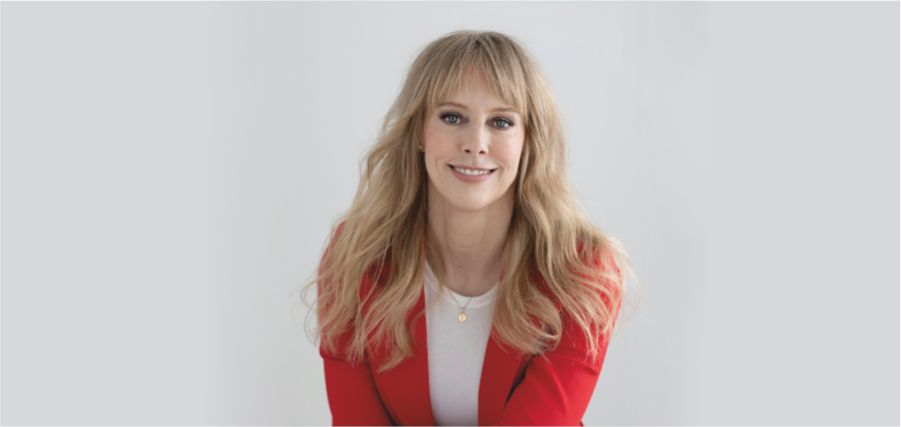
Catherine Cone, Sustainability Advisor at the Sports Boulevard Foundation, is one of the leaders contributing to this shift. With more than two decades of experience spanning environmental assessment, renewable energy, large-scale development, organizational sustainability, and strategic advisory, she brings a practical and wide-ranging perspective to one of the most important challenges facing organizations today. From Canada to Oman and now Saudi Arabia, her journey has been shaped by curiosity, conviction, and a willingness to step into unfamiliar opportunities—qualities that continue to define her work as she helps turn sustainability principles into meaningful action.
A Journey Shaped by Science, Creativity, and Opportunity
Catherine’s early influences came from two very different worlds. Her father is a parasitologist, while her mother was an artist. Growing up around both science and creativity gave her an appreciation for different ways of understanding the world. She performed strongly in the sciences during high school, explored the arts as an undergraduate, and later found a professional direction through environmental studies.
She completed a multidisciplinary Master’s of Environmental Design at the University of Calgary, where she focused on environmental science and developed a strong interest in wind energy development and industry best practices. Her academic path did not follow a narrow line. Instead, it combined scientific inquiry, creative exploration, environmental thinking, and an understanding of how different disciplines can contribute to complex challenges.
Education also introduced her to people who shaped her professional outlook. Throughout her studies, she learned from experts whose passion for subjects such as Environmental History and International Development made a lasting impression. These experiences reinforced the importance of curiosity and demonstrated how knowledge from different fields can contribute to a broader understanding of sustainability.
Her professional career continued this pattern of learning. During her early years of work, senior colleagues recognized leadership qualities that she was still beginning to discover. Catherine worked hard, asked questions, and volunteered for challenging assignments. Her mentors responded by placing her on demanding projects and involving her in important decision-making processes.
One of the most significant examples came in 2012. During a routine Monday team meeting, an executive asked whether any chemical or mechanical engineers wanted to relocate to Muscat, Oman, to support a major program focused on developing engineered landfills. Catherine was neither a chemical nor a mechanical engineer. Nevertheless, she raised her hand.
She believed her strengths in project management could help establish the environmental office and support the program. A few months later, she moved to Oman. The experience became an important lesson in professional confidence. She had not waited for an opportunity that perfectly matched her background. Instead, she identified how her skills could create value and accepted a challenge that expanded her career.
Building Experience Across Sustainability and Renewable Energy
For the first fifteen years of her professional career, Catherine maintained a strong focus on impact assessment and renewable energy. Her Master’s research into wind energy development provided a foundation for this work and eventually opened another significant opportunity.
When a volunteer board position became available at the Canadian Wind Energy Association, now known as the Canadian Renewable Energy Association, Catherine decided to put her name forward. The decision required confidence. She competed against wind energy professionals with decades of experience and ultimately received enough support from hundreds of association members to earn a place on the board.
The position expanded her understanding of decision-making beyond individual projects. Board participation exposed her to industry-level discussions, governance responsibilities, and the realities of balancing different interests. It also strengthened her professional network and contributed to the next stage of her career.
Her understanding of sustainability has also benefited from exposure to international forums and global conversations. In 2023, she attended COP28 in Dubai and also participated in a side event, contributing to discussions around sustainability and global action. In 2024, she attended the World Economic Forum in Davos, where she moderated a side event, adding another valuable dimension to her experience engaging with international platforms and diverse stakeholders. She also participated in the High-Level Political Forum connected with the United Nations General Assembly in New York City. These experiences reinforced the scale of the sustainability challenge while also showing that meaningful action takes place at many levels.
Global frameworks can establish direction, but implementation must reflect local realities. Catherine sees value in translating broad commitments into actions that governments, organizations, communities, and individuals can apply within their own contexts. This principle has become increasingly relevant in the Middle East, where ambitious development agendas require approaches that align international objectives with regional priorities.
Most recently, Catherine completed a twelve-month executive education program for Chief Sustainability Officers at MIT. The program added another layer to a professional journey defined by continuous learning and adaptation.
Supporting Sustainability Through Strategic Advisory
Catherine now works as a Sustainability Advisor with the Sports Boulevard Foundation. In her advisory role, she concentrates on helping organizations integrate sustainability into their day-to-day operations and strategic direction.
Her responsibilities include creating business processes that incorporate sustainability considerations, supporting departments as they develop and implement strategic targets, exploring innovative approaches and partnerships, and guiding cross-sector teams toward organizational objectives.
Her previous experience as Head of Sustainability gives her a practical understanding of what implementation requires. In that role, responsibility extended beyond setting a mandate. She also built teams, supported and mentored colleagues, and ensured projects progressed according to schedules and budgets.
Advisory work allows her to focus closely on strategy, integration, and organizational development. She describes this transition with characteristic humor, noting that an advisor can focus on the work while carrying less of the operational pressure associated with leading an internal function. Yet her background in executive responsibility remains central to her approach. Recommendations must work within the realities of budgets, timelines, organizational structures, and competing priorities.
Embedding Sustainability from the Beginning
Large-scale urban and infrastructure developments create opportunities for economic and social advancement, but they also require careful consideration of environmental and operational impacts. Catherine believes data collection and management should become a priority at the earliest stages of planning.
A sustainability assessment can only be as reliable as the information supporting it. Organizations therefore need clear systems for collecting, managing, and using relevant data. Rather than treating reporting as an activity that begins after implementation, Catherine supports building these processes into everyday operations from the start.
This approach also reflects her broader view of sustainability. Environmental, social, and economic considerations, together with governance, do not operate as separate categories. They influence one another continuously.
A clean and healthy environment can contribute to social wellbeing. At the same time, healthy and engaged communities may have greater capacity to protect and maintain their surroundings. Economic performance also remains part of the equation. Catherine believes sustainability should not be viewed simply as a cost or a discretionary initiative. When integrated effectively, it can contribute to operational efficiencies, value creation, and revenue.
From Skepticism to Measurable Value
One of the most difficult challenges Catherine faced earlier in her career came from the way sustainability was sometimes treated as a checkbox. Convincing decision-makers of its importance could become emotionally demanding, particularly when they questioned work that she felt strongly about.
The conversation has changed over time. In many jurisdictions, regulations now make sustainability a more established organizational requirement. However, new questions have emerged. The challenge often focuses less on why sustainability matters and more on the cost of implementation.
Catherine believes this discussion can evolve again. Instead of asking why sustainability costs so much, organizations can increasingly evaluate the positive gains created through sustainable decisions. This shift requires stronger measurement, clearer communication, and a better understanding of the relationship between responsible practices and business performance.
Her approach to stakeholder alignment begins with strategy and accountability. Sustainability goals gain greater traction when they form part of the organization’s overall direction and when responsibility is shared among relevant stakeholders. Different teams contribute different pieces to the larger objective, while a central sustainability function can coordinate progress and monitor implementation.
This model recognizes that sustainability cannot depend on one department alone. Finance, operations, development, procurement, leadership, and other functions all influence outcomes.
A Reluctant Leader Who Values Trust
Catherine has been described as a “reluctant leader,” a description she considers meaningful. She has never deliberately pursued leadership as an end in itself. Instead, others recognized qualities that led them to place her in positions of increasing responsibility.
Trust, hard work, sound judgment, and a willingness to make decisions have helped define her professional style. As an advisor, she places particular importance on honesty, empathy, and realism.
These principles also influence her approach to mentoring. Catherine’s own career benefited from mentors who recognized potential and created opportunities for her to grow. They challenged her, included her in important decisions, and encouraged her development before she fully understood her own leadership capacity.
Her experience demonstrates the value of creating environments where people can ask questions, volunteer for difficult assignments, and contribute beyond the limits of their job descriptions. Growth often begins when someone receives both an opportunity and the confidence to accept it.
Defining Material Priorities in the Middle East
Catherine sees sustainable finance and financial sustainability as related but distinct concepts. Sustainable finance concerns what an organization chooses to spend money on and whether those investments meet recognized environmental or sustainability criteria. Financial sustainability concerns an organization’s ability to remain viable over time.
She believes these concepts can sometimes become confused. For sustainability leaders, examining where organizational capital goes can provide valuable insight. When companies assess their projects through existing sustainable finance frameworks, they may discover that fewer initiatives qualify as “green” than expected.
Catherine does not predict exactly how quickly sustainable finance will expand across the Middle East. However, she believes interest can grow when organizations begin asking more direct questions about their investments and the outcomes they support.
She also identifies materiality as both a major opportunity and a major challenge for ESG strategy and reporting in the region. Organizations must determine which sustainability issues matter most to their operations while also considering regional priorities.
Water provides a clear example. As a scarce resource in much of the Middle East, it can represent a material concern for many organizations. Collective progress can be significant, but each organization’s responsibility should reflect its particular impact and role.
Moving beyond compliance requires action from both directions. Catherine advocates for a bottom-up approach that integrates sustainability into daily operational processes, supported by broad strategic direction from senior management. When these two forces work together, sustainability can become part of how the organization functions rather than a separate reporting exercise.
Looking Toward a More Digital Sustainability Future
Over the next five to ten years, Catherine believes digitization and artificial intelligence applied to ESG data collection, analysis, and reporting could become transformative. The Middle East, in her view, has an opportunity to play a leading role in this global shift.
Improved technology can help organizations manage complex datasets, identify trends, strengthen reporting, and support faster decision-making. However, technology will remain a tool rather than a substitute for judgment. Organizations still need clear priorities, reliable information, accountable leadership, and practical implementation.
Catherine hopes to continue building her career in the Middle East over the medium term. Saudi Arabia has become a professional home, and she values the network of sustainability professionals she has developed there. Over the longer term, she may expand her expertise and services to global organizations, including institutions such as the United Nations.
Advice Rooted in Action
For young professionals, particularly women who want to build influential careers in sustainability, ESG, and sustainable finance, Catherine’s advice reflects the decisions that shaped her own journey.
Be fearless. Raise your hand. Ask questions. Volunteer for opportunities, even when they seem unfamiliar. Build a professional network and maintain a genuine passion for the work.
Her career offers a practical example of this philosophy. A willingness to accept a role in Oman, compete for a board position, engage with international forums such as COP28, the World Economic Forum in Davos, and the High-Level Political Forum in New York, and continue learning has repeatedly created new opportunities.
She also sees this as an especially dynamic period for sustainability professionals in the Middle East. The region continues to develop new approaches, ambitious projects, and opportunities for collaboration. For emerging leaders, the environment offers space to contribute, learn, and help shape the direction of future development.
A Legacy Still in Motion
Catherine does not believe anyone can fully understand the legacy they will leave behind. Every role, project, decision, and professional relationship becomes part of a larger story. The people an individual works with may carry forward lessons, ideas, and experiences in ways that cannot always be predicted.
Her hope remains straightforward: that her contribution to the region’s sustainability journey will be positive.
That perspective reflects the broader character of her career. Catherine Cone has not built her path by following a fixed plan or pursuing leadership for its own sake. She has learned from mentors, embraced unfamiliar opportunities, developed expertise across multiple areas, and continued adapting as the sustainability field has evolved.
As the Middle East advances its economic and development ambitions, professionals who can connect strategy with implementation will remain essential. Catherine’s work demonstrates the importance of asking difficult questions, building practical systems, sharing accountability, and understanding sustainability as a connected framework rather than a collection of separate objectives.
Her journey also carries a message that extends beyond ESG. Progress often begins when expertise meets curiosity and when individuals have the confidence to step forward before they feel completely ready. For Catherine, that willingness to raise a hand has shaped a career dedicated to helping organizations turn sustainability principles into meaningful action.