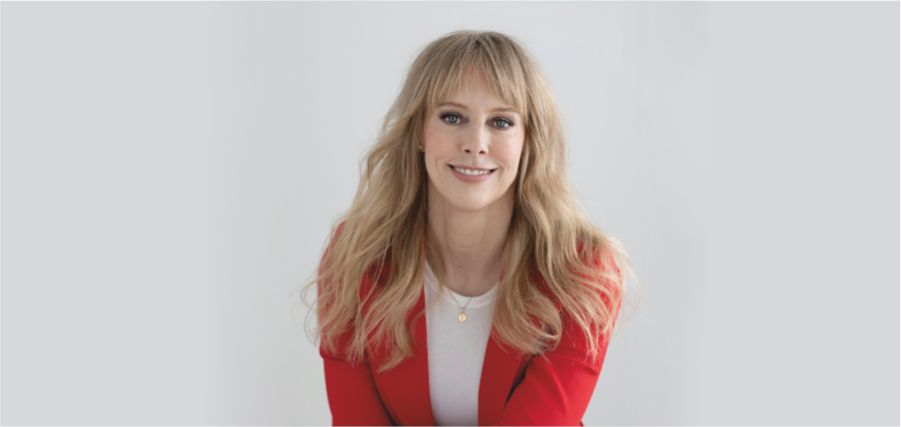
In a business environment where growth is often measured through revenue, market expansion, and new opportunities, the harder question is what happens after the growth arrives. Can the organization deliver consistently across markets? Can teams make decisions without unnecessary dependency? Can technology, finance, supply chain, customers, and commercial priorities move in the same direction?
For Julie Pearl, these are not abstract management questions. They are the realities that define strategic operations.
Since joining Coates Group in Dubai in 2017, Julie has built a career around the point where strategy meets execution. Her responsibilities have expanded across commercial operations, technology deployments, supply chain and logistics, financial coordination, customer relationships, cross-functional projects, and regional execution. Today, as Operations Manager for the Middle East and Africa (MEA), she works across diverse markets where regulatory structures, infrastructure, banking systems, import requirements, currencies, customer expectations, and technology maturity can vary significantly.
Her journey reflects a broader understanding of modern operations: the function is no longer simply responsible for keeping the business moving. It is increasingly responsible for making growth repeatable, commercially sound, and operationally sustainable.
From Execution to Strategic Operations
Julie did not begin her career with a fixed ambition to become an operations leader. Instead, she repeatedly found herself drawn to the place where plans either become real or fall apart.
That mindset became especially important as her responsibilities at Coates Group grew. Her exposure across commercial, financial, technological, and operational functions changed her view of what it means to run a business. A decision made on a spreadsheet eventually becomes a product crossing a border, a deployment requiring coordination between multiple teams, a payment affected by local banking requirements, or a customer expectation that depends on several functions working together.
This exposure changed her view of operations. Execution alone was not enough. The deeper value came from understanding the system behind the outcome.
One of the defining milestones was her promotion to Operations Manager for MEA. It reinforced a lesson that has shaped her leadership: responsibility often exceeds authority. An operations leader may own the outcome while relying on suppliers, global teams, financial institutions, regulators, logistics providers, and other functions to deliver individual pieces of the solution.
That reality pushed Julie to develop a leadership style based on influence, anticipation, judgment, and ownership. Rather than waiting for complete control or perfect information, she learned to make informed decisions, connect stakeholders, and remain accountable for the result.
Nearly a decade into her journey, she still describes herself as an operator first. But her understanding of the role has evolved. She now sees operations as a strategic discipline capable of revealing where a business is strong, where it is exposed, and what must change before growth creates greater complexity.
Scaling Across Markets Without Losing Local Intelligence
Coates Group provides the setting for this philosophy. The Australian, family-founded technology company has more than 60 years of history. Its origins in traditional signage have evolved into a global business delivering digital signage technology, software, and end-to-end services, particularly across quick-service restaurants, fuel, and retail.
Today, Coates has more than 500 people globally and operates across international markets. Its work sits behind customer experiences that may appear simple on the surface: a self-order kiosk, a digital menu, a drive-thru interaction, or another connected retail experience. Behind those moments are hardware, software, content, data, infrastructure, supply chains, installation, support, and operational processes.
For Julie, this complexity illustrates an important principle: technology creates value only when it works in the real world.
Her MEA experience has made that principle even clearer. The region cannot be treated as one uniform operating environment. The UAE may require a different approach from Saudi Arabia, Kuwait, Bahrain, Qatar, Egypt, Cyprus, Jordan, Türkiye, Pakistan, Oman, Mauritius, or markets across Africa. Regulatory requirements, import processes, banking structures, infrastructure, currencies, customer maturity, and market conditions can differ substantially.
Therefore, scaling is not a matter of copying a successful model from one market into another. It requires global consistency where standards and quality matter, combined with local intelligence where market realities demand adaptation.
This balance has become central to Julie’s role. Her work involves translating global capability into solutions that are commercially and operationally viable in specific markets.
Connecting Strategy with the Detail
As Operations Manager for MEA, Julie operates at the intersection of strategy, commercial priorities, and execution. Her responsibilities can move rapidly from regional forecasts and operational priorities to payment structures, shipment constraints, deployment requirements, or customer escalations.
Rather than separating strategic work from operational work, she sees the detail as a source of strategic intelligence.
A recurring logistics issue may expose a weakness in market-entry planning. A delayed payment can signal commercial risk. A customer escalation may reveal a process that cannot scale. Each operational problem can therefore become evidence about the wider system.
This perspective has changed how Julie approaches problem-solving. She distinguishes between situations that require direct intervention and those that require a process redesign. If the same issue repeatedly requires personal rescue, the problem is no longer simply the incident. It is the system.
That distinction is critical for scalable growth. Organizations cannot build sustainable performance around individual heroics. They need processes, visibility, accountability, and decision-making structures that reduce the need for repeated intervention.
For Julie, operational excellence means being close enough to the detail to understand reality while remaining far enough above it to recognize patterns and anticipate what comes next.
Resilience Through Better Systems
Operating across MEA has also required Julie to become comfortable with uncertainty. There is rarely a perfect set of information when an important decision needs to be made.
Suppliers may sit thousands of kilometers away. Projects can depend on global teams. Customer commitments can be affected by regulatory changes, production capacity, banking requirements, or decisions outside an operations function.
In such situations, waiting for certainty can be as damaging as making a poor decision. Julie’s approach is to assess risk, distinguish what is known from what is not, and make the best decision available.
Earlier in her career, she associated operational strength with being exceptionally good at fixing problems. Over time, she recognized that becoming the person who can rescue everything can create another form of organizational weakness.
The better question is why the rescue was necessary.
Today, when something goes wrong, she addresses the immediate issue but then examines where the process failed, what was known too late, which dependency was underestimated, and what can be changed so that the same problem does not return.
For Julie, resilience is not about absorbing unlimited pressure. It is about building systems that reduce the amount of pressure the organization needs to absorb.
Leadership Built on Clarity, Context, and Ownership
These lessons have shaped a leadership philosophy grounded in three principles: clarity, context, and ownership.
Clarity means people understand what matters, what is expected, and where decisions belong. Context means they understand why a decision is being made rather than simply following instructions. Ownership means people feel responsible for outcomes rather than only for their individual tasks.
This approach becomes especially valuable in complex, cross-functional environments. People make better decisions when they understand the bigger picture, and organizations become less dependent on one individual when judgment is distributed through capable teams. Julie also recognizes that leadership must adapt to circumstances. Collaboration is essential in some situations, while uncertainty may require a leader to make a decision rather than prolong discussion in pursuit of complete consensus.
She is equally conscious of the difference between pressure and urgency. When everything is labeled urgent, teams lose the ability to prioritize. One of a leader’s responsibilities is therefore to absorb enough noise to help people focus on what genuinely matters.
Her ultimate measure of leadership is simple: success should not depend on the leader always being present.
Building Capability, Not Dependency
For Julie, strong teams are built through trust rather than uniformity. She encourages people to question, disagree, admit what they do not know, and remain accountable to one another.
Working across countries, cultures, functions, and time zones reinforces this philosophy. The person closest to a problem may have the most valuable information. Leadership does not require being the smartest voice in every room. Sometimes it means asking the right question, connecting the right people, and stepping back. When team members bring a problem, Julie often asks what they believe should be done. The objective is not to demand a perfect answer. It is to develop judgment through practice.
Her approach to mentorship follows the same principle. She shares both knowledge and the mistakes behind that knowledge, while resisting the idea that future leaders should become copies of their mentors. The goal is to help people develop confidence, self-awareness, and independent judgment.
Continuous learning also remains part of her own leadership discipline. With AI, automation, data, and connected technologies changing the industry, experience cannot become an excuse for becoming outdated.
Innovation With a Purpose
Julie’s view of innovation is practical. Staying informed is not the same as staying ahead. A technology may be impressive, but its real value depends on whether it can be implemented, supported, adopted, and scaled.
She pays attention to AI, automation, data, digital customer experiences, and connected technology ecosystems, while also watching the markets themselves. Recurring customer requests and operational friction can reveal future trends before they become obvious in industry reports.
Looking ahead, she believes the next decade will bring a shift from digital transformation as a series of projects toward intelligent operations as an operating model.
AI, automation, predictive analytics, and connected physical and digital systems could reshape how businesses understand customers, manage content, maintain technology, and make decisions. In quick-service restaurants and retail, these technologies may enable more responsive experiences while automating more of the systems supporting them.
Yet the challenge is organizational, not only technological. Technology can evolve faster than processes, skills, legacy systems, governance structures, and decision-making models.
For Julie, the businesses that capture the greatest value will not necessarily be those with the most technology. They will be those that understand where technology genuinely belongs.
She sees AI not as a replacement for judgment but as infrastructure for better judgment—helping remove repetitive work, identify risk earlier, and give leaders better information before problems become urgent.
Building the Next Stage of Growth
Her long-term ambition reflects this broader perspective. For Coates, she wants to contribute to an MEA operation that can grow without complexity increasing at the same rate.
That means stronger systems, better visibility, smarter use of data and automation, clearer decision-making, and operating models that can adapt as markets expand. Personally, Julie is moving toward broader strategic leadership. Her operational experience has given her a close view of execution; the next step is to apply that understanding to larger questions around investment, scaling, cross-functional performance, technology, AI, and measurable business results.
She is developing further across strategy, finance, AI, and organizational leadership, with a long-term path toward Chief of Staff and ultimately COO-level responsibility.
Yet she is not focused on titles for their own sake. Her ambition is to build the capacity required for the responsibility before pursuing the position itself.
A Career Defined by Usefulness
Julie’s advice to emerging leaders is rooted in the same philosophy that shaped her own career: become genuinely useful before trying to look successful.
She encourages professionals to understand the whole business, learn how the company makes money, understand customers, read the numbers, and become curious about what happens before and after their own work. She also warns against confusing busyness with value. A full calendar and constant urgency may create the appearance of importance, but lasting impact comes from judgment, prevention, stronger systems, and developing other people.
Her message is equally clear on learning. Careers cannot be built entirely around what someone already knows. Industries change, technologies evolve, and new roles emerge. Staying curious enough to become a beginner repeatedly is a professional advantage.
The Legacy of Making Complexity Clearer
For Julie, legacy is increasingly defined not by what a leader personally achieves, but by what continues to work after that leader leaves the room.
She wants to leave organizations with better systems, clearer ways of working, and stronger decision-making. An operation that depends on one person knowing everything or rescuing everything is not truly scalable; it is dependent.
She also hopes to strengthen the strategic voice of operations itself. In her view, operations should not be treated merely as the function that executes strategy after the important decisions have been made. It is close to execution that leaders discover whether strategy survives contact with reality.
For the next generation, Julie wants her career to demonstrate that leadership does not require arriving as the obvious choice. Credibility can be built through curiosity, judgment, consistency, and a willingness to expand one’s capabilities.
Her aspiration is not to be remembered as the person who always had the answer. It is to be remembered as someone who made complicated things clearer, left systems stronger, and helped others discover what they were capable of achieving.
That philosophy captures the essence of her leadership journey. In an era when organizations are under pressure to grow faster, digitize more quickly, and operate across increasingly complex markets, scalable growth will depend on more than ambition or technology. It will depend on leaders who can connect strategy with reality, transform recurring problems into better systems, and build organizations that become more capable as they become larger.
Julie Pearl represents that kind of operator: one who does not simply keep the business moving, but works to make the movement smarter, stronger, and sustainable.